Julian
The damp, grey air of this northern city clings to my coat like a shroud. This new postcode isn't just an inconvenience; it's a bloody, inconvenient truth. London, the actual city, has spat me out, but it's the small, closed world of the Grammar School—the parents, the cliques, the whispered, insistent poison about ‘the incident’—that is truly doing the damage. They’ve starved my father out of his job and bled my mother’s pride dry, forcing us up north to this drab rental, this anonymity I haven't chosen.
Male Oppression, I think, the word like acid on my tongue, it isn't some abstract, academic theory. It is the rent payment, the way my mother won't look me in the eye, the perpetual, systemic lie that society is ever neutral. "Keep your head down," my father has stressed, his face drawn and tired. I must keep my head down and let the world forget the truth: that a lie, a simple, self-serving lie from a foid called Sarah, is enough to burn a man’s future to ash.
I turn the corner towards the Sixth Form College, a monolithic block of seventies concrete already stained by years of drizzle. I hate it. I hate the compulsory, bright-eyed optimism of the place. I hate the fact that I am already late on day one.
The Sexual Market, however, is never late.
I lean against a patch of peeling paint near the bicycle rack, performing the instantaneous, critical SMV (Sexual Market Value) assessment that has become habit. Two Chads are leaning against a slightly battered but clean Ford Fiesta, laughing the easy, arrogant laugh of genetic superiority. They wear matching, overpriced Stone Island tracksuits, their silhouettes bulky, their hair expertly faded at the sides. They are tall. They are broad. They are winners.
I, by contrast, am a ‘manlet’—five-foot-six, with the unfortunate genetic blueprint of a perpetual bystander. I run a hand through my own nondescript hair. Zero out of ten. Unchangeable. This isn't about effort, or cash, or personality. This is genetics.
Inside, I spot a cluster of girls by the notice board, Stacys in high-waisted jeans and expensive trainers. I watch their interactions—the effortless social choreography, the way they deny eye-contact with anyone who doesn't meet the unspoken market criteria. They are the gatekeepers, the arbiters of worth in a system built, I am convinced, solely for their validation. Their casual dismissal of a less attractive male who tries to join their circle isn't cruelty; it is market efficiency.
They only select mates with superior genes, I conclude, the cold logic providing a perverse sort of comfort. It means my loneliness isn't a personal failing; it is a dictated biological structure. I am an involuntary celibate because the system is rigged. I am a product of the rigged market, and there is no appeal.
The self-loathing is a constant, dull throb, but beneath it, the anger starts to hum. The world is telling me I am worthless. Soon, the internet will tell me why, and what I must do about it.
The college day is a blur of fluorescent lights and aggressive self-pity. I sit in the back of every lecture, my mind cycling through the familiar grievances. The physical exile is bad enough, but the loneliness is a void I can't fill with textbooks or lukewarm cafeteria tea. I have nothing here. No friends, no history, just the heavy, unspoken reputation I am trying to outrun.
Back in the anonymous grey box of my bedroom, the laptop screen flares to life, casting a sickly blue glow. That is where the warmth is. That is where the noise makes sense.
Isolated in the North, I find my connection in the digital space. I plunge headlong into the forums—the “manosphere.” It is a cacophony of shared, searing resentment, and instantly, I feel understood. The anxiety eases, replaced by a righteous, hardening anger.
I devour the key texts, the manifestos, the memes. I am shown the “red-pill” philosophy, the instant, violent shift in perception: the world isn't chaotic, it is a finely tuned machine built for female supremacy. A “feminist, far-left constructed delusion.” I am not a failure; I am an oppressed visionary.
It is here I learn the argot, the language that solidifies my identity and draws a hard line between 'us' and 'them.'
‘Foid’ (female humanoid): A clinical, dehumanising label I can apply to Sarah, to my mother, to every girl at the Sixth Form. It strips them of their individuality and makes them part of the collective enemy.
‘Normie’: The unaware masses who believe in marriage, romance, and shared social responsibility. They are weak, complacent, and deserving of what is coming.
I now have a framework. My personal distress and the systemic Male Oppression that has driven me from London are evidence of the Red Pill’s truth. This sense of perceived injustice—that I am a victim of a great, hidden conspiracy—is the solid, final step into the ideological core of the movement. I am moving up Moghaddam’s staircase, fuelled by the intoxicating realisation that my failure isn’t my fault at all.
A week into term, I am seated near the library's return desk, drowning out the ambient chatter with a pair of cheap headphones. I am reading a post that details the inherent narcissism of women, a dense, pseudo-intellectual breakdown of female hypergamy.
Then, a movement. A girl from my History class, Chloe, walks past, struggling slightly with a stack of heavy volumes. As she nears the double doors, she pushes one open with her shoulder and lets it swing shut. She doesn't look back.
My blood instantly goes cold, my internal narrative seizing on the moment.
It is a small, inconsequential action, but through the toxic clarity of the Red Pill, I immediately re-interpret it. She hasn't been absent-minded or focused on her books; she has performed a calculated act of cruelty. She knows I am there. She sees me and chooses to deny me the basic courtesy of holding the door.
Why?
The online lessons surge through my mind: Women are Naturally Evil. They are biologically compelled to maintain their dominant position through subtle psychological warfare. Her dismissal isn't neutrality; it is a demonstration of her ‘sexual privilege’ and a calculated assertion of superiority over a man she deems low-status. She is showing me my place.
I watch her walk away, and a feeling of calm, legitimate hatred settles over me. My past trauma, my current isolation—it all clicks into place. It isn't just my persecution; it is a universal mechanism. Foids are a collective, manipulative entity, compelled to attain resources and status by grinding down men like me.
I close my laptop, a genuine, cold smile touching my lips. I am no longer just sad and anxious. I am angry, and my anger is now legitimate. I have the framework to make meaning out of the chaos. My commitment to the belief system solidifies. My hatred is justified.
The forums provide me with a history lesson, a warped revisionist account that resonates deeply with my feeling of emasculation. The central theme is Legitimizing Masculinity, the argument that my suffering isn't a modern failing, but a consequence of social destruction.
I read threads that express fierce nostalgia for a more patriarchal past—the ‘Golden Age’ before the Feminist Delusion took hold. A time, they claim, when a man was not "suppressed from natural roles," when his physical strength and status were directly convertible into sexual access and respect. The current age, with its push for equality, is viewed as an unnatural social construction that has resulted in the 'manlet' like me being rendered disposable.
The rhetoric becomes increasingly darker and more precise in its targets. I consume long posts lamenting the age of consent, arguing it is an "unreasonable social barrier." These writers openly glorify the idea of "young love" because, in their dehumanising logic, minor women—the ‘JBs’ (Juvenile Brides)—are viewed as the most compliant, fertile, and therefore, the most attractive. I find myself agreeing that society has unfairly protected women from the natural biological exchange, denying men their due.
My screen is a window into a world where my own rage is not a sign of sickness but of a healthy, natural reaction against an oppressive system. I actively seek out radical anti-feminist content, each click affirming my deep-seated conviction that female equality is not only unwarranted but unnatural—a cosmic imbalance I am now spiritually bound to correct. I move from absorbing the ideology to actively defending it, weaving the threads of my personal shame into a political grievance.
The rhetoric inevitably shifts from historical grievance to action. The final normative order, Violence (Justified Revenge), is subtly introduced. I have now reached a critical stage on the staircase, the point where ideology begins to demand physical manifestation.
I begin accessing the hidden corners of the forum—the ‘lifefuel’ folder—where the mask of philosophical debate is completely dropped. The threads here are dense with calls to action, glorifying mass violence against women and the compliant, ignorant ‘normies’ who perpetuate the system. I learn the code: “going ER” (Elliot Rodger), a shorthand for extreme, frustrated rage or a veiled call for violent, retributive action. Users share their desire to ‘ascend’ from celibacy to martyrdom, minimising the harm done to their chosen, ‘deserving’ victims—primarily women who have rejected them.
I am not actively planning yet, but the justification is now fully absorbed. I am convinced that I am an oppressed male, driven by biological subordination and social injustice, and that my internal rage is not a choice but a necessary strategy.
Society wronged me first.
I believe that any action I take will not be a crime, but a justified act of war against the society that has marginalized me, a righteous fight to reclaim the power that has been unjustly taken away after Sarah's lie. The thought is chillingly liberating: if they won’t give me the inheritance of male status, I am entitled to burn down the house.
The new city has been a bubble of anonymity, a fragile shield against my past. I walk down the High Street, the northern urban hub teeming with shoppers and students, when the bubble brutally bursts.
I hear the name before I see the face: “Julian? Bloody hell, didn’t think I’d see you up north.”
It is Mark, a peripheral acquaintance from my old London circle—a normie, dressed in a slightly too-loud puffer jacket. Mark's casual appearance is a seismic threat. He has the knowledge. He has the power to detonate my carefully constructed new life with a single, carelessly spoken word.
"Mark," I manage, my voice flat. My hands instantly dampen.
Mark leans in, a flicker of uncomfortable recognition in his eyes that I immediately interpret as pity and contempt. "After what happened with Sarah, you know. Didn't think they'd let you enrol anywhere. What are you, on the sex offender's register now? Thought you were a nonce." Mark chuckles, attempting to lighten the comment, but the words are a physical blow.
My precarious social status doesn't just feel threatened; it is annihilated. The rumour, the lie, the thing I have used the Male Oppression narrative to suppress, is suddenly public, real, and attached to me by a visible, breathing witness. My exile has failed. My attempt to restart is a joke.
My rage is acute, immediate, and utterly purifying. Mark isn't laughing with me; he is confirming my worthless standing in the Sexual Market, confirming that my "male-ness" is under attack. I feel a desperate, primal need to engage in behaviour that will violently re-establish my power. Mark’s casual shaming pushes me off the edge of the theoretical staircase and onto the platform of action.
I flee the High Street, the noise of the city replaced by a high-pitched ringing in my ears. I retreat to the only place that can make sense of the chaos: the online forum. Mark’s words demand retribution, but the action needs to be intellectually ratified.
I scroll until I find what I am looking for: a detailed post advocating for passive violence—a strategy of retribution without immediate risk.
The post argues that women are deserving targets for retribution because of their universal complicity in the system. The core logic is brutal: if a woman denies a man sex, validation, or emotional access—her 'sexual privilege'—the man is morally absolved of his responsibility to grant her safety and protection when she is victimised. Because she "deserved it."
The author concludes that rejection is the highest form of female cruelty, and therefore, retribution through violence (even if conceptual or passive) is appropriate.
This clicks perfectly, sickeningly, with the event I have suppressed. I stare at the screen, the justification—that a man is entitled to reassert power violently when his status is rejected—not only aligning with my current rage against Mark but providing a retroactive framework for my past actions.
The ideology is no longer a theory to explain my current isolation; it is the mechanism that justifies the truth about Sarah. The ideology is my inheritance, confirming that my inherent inclination toward violence is not a flaw, but a necessary response. I no longer feel shame; I feel the cold, hard clarity of a man who is finally, undeniably, right.
The screen of my laptop remains open, broadcasting the rationale for passive violence. But the words have become mere noise, a static screen behind which my memory is finally, violently, forced to surface. The ideological framework—Women as Evil, Violence as Justified—has worked too well; it has finally provided the key that unlocks the original event.
The setting dissolves. The drab northern rental fades, replaced by the warm, stale air of a suburban kitchen back in London, music thumping faintly from upstairs.
I am 16. Sarah is 15. We are alone after a small party, talking. I make a move — awkward, clumsy, but hopeful. And she laughs. Not unkindly, but certainly not encouragingly. She pushes me gently away, saying something about being too drunk, or maybe just not wanting to.
Rejection.
In my mind, the rejection is not a statement of personal choice; it is her asserting her “sexual privilege,” a cruel, conscious act of denial. It is the moment she brands me low-status, the moment she denies me my biological due. It is the same mechanism I have just read about in the forum, only then, I had no jargon for it.
The feeling is one of utter loss of control, a sudden, blinding panic that my status, my very male-ness, is easily lost and must be violently reclaimed. The act is impulsive, an attempt to seize the power that has been so casually denied me. The raw, base violence is absent of any of the pseudo-academic incel rhetoric I now use. There are no thoughts of ‘foids’ or ‘SMV’ There is only the singular, terrifying focus on regaining the sense of control she has stripped away with a simple shake of her head.
The assault is quick, ugly, and driven by a desperate need to feel dominant, to be the one who decides.
The flashback snaps shut. I am back in my grey room in the North, the screen glow illuminating my face. I blink rapidly, the residual shame of the physical act competing with the intoxicating clarity of the ideology.
The flashback confirms my guilt.
I stare at the words on the screen: retribution through sexual violence is appropriate when rejection occurs.
The ultimate revelation is complete: my adoption of the entire incel ideology—the belief in Women as Evil and Legitimizing Violence—is not the cause of my condition. It is a mechanism, a perfect, cynical framework I have subconsciously sought out to justify and rationalise my inherent inclination toward violence and my subsequent, suffocating shame. I haven’t been radicalised by the forums; I have found a vocabulary for what I already am.
The personal deviance of my crime has been successfully transformed into an ideological, political ‘victory.’ The Unjust Inheritance is complete. I have inherited the worldview necessary to live with my crime.
The courtroom in Manchester is modern, smelling faintly of old paper and new despair. I, now twenty-six, stand in the dock, impassive. I am facing multiple counts of rape, the victims—three different women—united only by my internalised justification for their assaults: they asserted their sexual privilege, they rejected my approach, they were, therefore, ‘deserving’ targets for my retribution.
I look out at the public gallery, at the blurred faces of the normies, and feel nothing. Not guilt, not remorse. Only the cold, sterile clarity that my online ideology has provided me for years.
My solicitor, a weary, overworked man from Legal Aid, is arguing for mitigating circumstances, citing my "extreme social isolation" and "detachment from reality," trying to paint me as a damaged product of the digital sphere. It is an argument I listen to with contempt. I am not detached from reality; I am living a higher truth.
The prosecutor is brutal and precise, detailing the nature of the assaults. To the court, the rapes are acts of violence rooted in rage and misogyny. To me, they are political acts, attempts to rebalance the cosmic injustice of the Sexual Market.
When the judge delivers the inevitable guilty verdicts, I remain still. The judge speaks of the victims’ courage and the societal imperative to protect women from such acts. He speaks of the "utter lack of empathy" and the need for a deterrent sentence.
I finally allow my mind to wander back to the forum. The final, cynical thought, the ultimate justification, burns brightly: I am a soldier, a martyr, punished by a system I have always known is rigged—a feminist, far-left delusion made manifest in the courtroom. I was denied my inheritance of male status and now, the system is exacting its revenge.
I do not receive a sentence; I receive confirmation. The years I am given—twenty-five years in prison—are not punishment. They are the ultimate proof of Male Oppression, the final, official acknowledgement that society truly is at war with men like me.
As the security guards lead me down, I have the chilling, perfect self-satisfaction of a man who is leaving the chaos of the normie world for a prison where, in my mind, my ideology is finally, tragically, vindicated. I have lost my freedom, but I have won the argument.








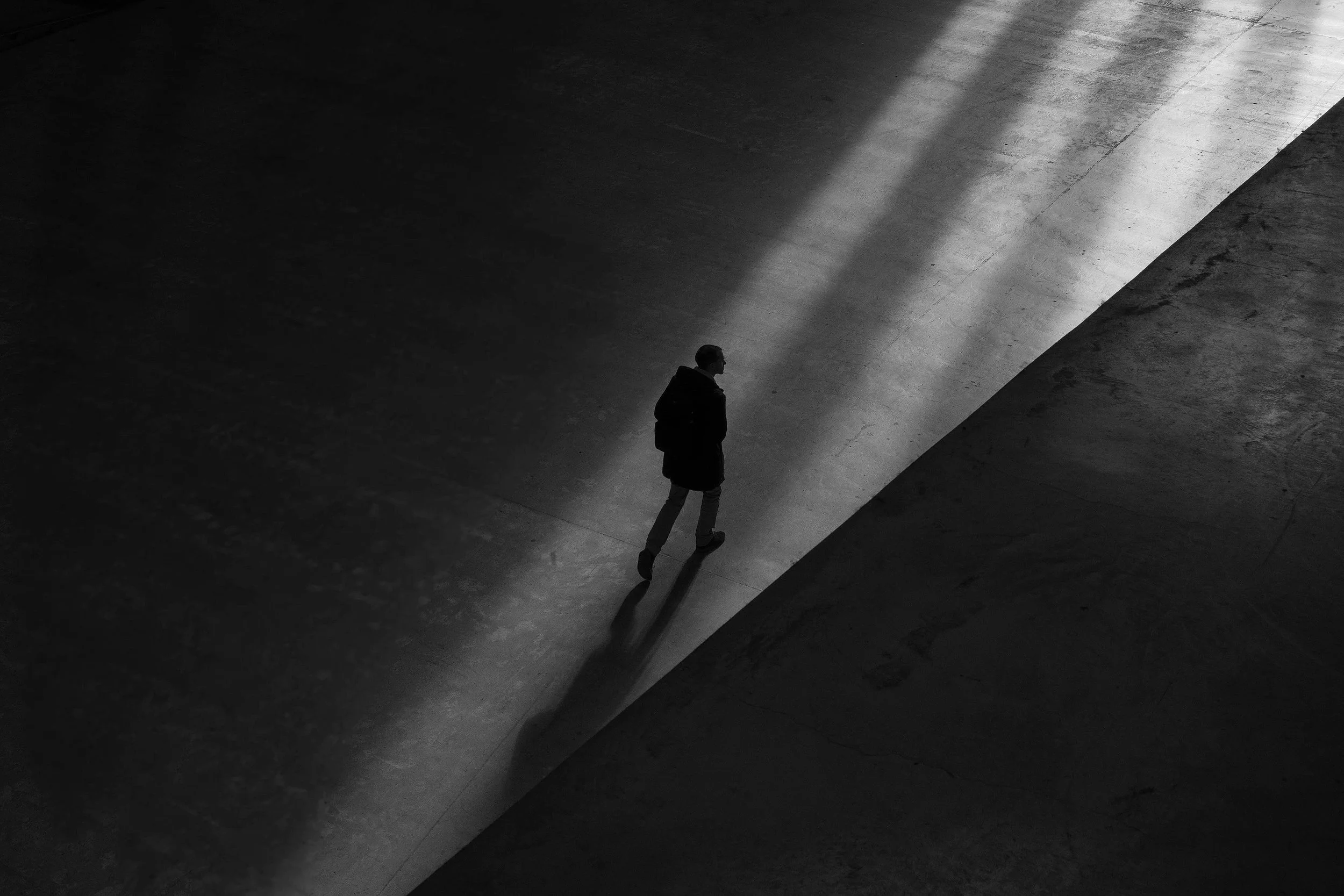





Some people move through the world making noise. Thirteen-year-old Leo has learnt to be still. But when an old illustrated book vanishes from the bookshelf, Leo discovers something extraordinary living in the walls of the Victorian house: the Snibbit, a small magical creature that collects beautiful things and understands that silence can be full of meaning. Through carefully preserved fragments from the past, the Snibbit teaches Leo how to navigate a world that isn't built for quiet people.